Dogs and gardens: can they co-exist? Many dogs – especially young ones – have a reputation for being hard on gardens.
They crash through planting beds chasing squirrels, dig holes in flower beds and pee on shrubs and perennials.
However, if you make your garden pet-friendly and put some effort into training, your dog can become a great garden companion.
Sharing the garden with dogs
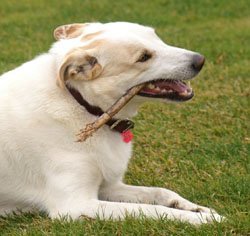
My dog Toby
For as long as I’ve gardened, I’ve had a one-of-a-kind dog (Heinz 57 to most people).
My first dog, Teddy, was a small blonde cutie, who never lifted his leg on a plant in our city garden. For him, the lawn was the right place to go. He must have picked up the idea from watching me fuss over plants.
He also was a fantastic squirrel cop: no tulip bulb was ever stolen by a squirrel while he was around.
Now that I garden in the country, I have Toby, a handsome white part-husky, part-collie and part-who-knows-what, who has the discreet habit doing his toilet stuff in tall-grass areas where people don’t walk. This saves me the chore of poop scooping in the garden. Like his predecessor, he keeps squirrels away, as well as rabbits, muskrats and deer.
My dogs have been so rewarding that I can’t imagine gardening without a dog keeping me company, so here are tips to help you make this work for you too.
First and most important: choose your dog carefully and spend real time training him or her! This is guaranteed to pay off in a happier relationship.
Dogs and gardens – safety first
When you have dogs or other pets spending time in the garden, choose alternatives to chemical lawn and garden care.
- Pest control products: Even if you use organic products, keep pets out of the garden when you’re applying them, and then keep them away from treated areas for as long as recommended, usually until the treated area is dry or 24 hours. Here’s a safe, organic way to control fleas in your backyard.
- Slug baits: The older types contained metaldehyde, which is harmful to pets if ingested. A safer alternative is slug baits made with iron phosphate as the active ingredient.
- Fertilizers: Many organic fertilizers are made out of bone meal, blood meal or fish emulsion, which can smell like dinner to a curious dog or cat. Store these products, as well as conventional fertilizers in plastic containers with secure lids where your pets won’t be able to get at them.
- Cocoa bean mulch: Compared to other species, dogs are unusually sensitive to a substance called theobromine found in cocoa beans, cocoa bean hulls and chocolate. If you have a dog, avoid cocoa bean mulch in the garden or keep your dog in areas of the yard where you don’t use this mulch. Here are other mulching alternatives, click here.
- Sharp edged garden tools: Your dog (and people too, especially children) can get injured if you leave a rake tines up or a hoe blade up, or open pruners on the ground.
Dogs and gardens – training tips
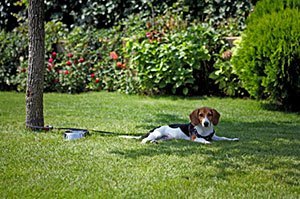
Dogs like to be with us in the garden
Dogs like to be where people are, so when you’re in the garden, take your dog with you for at least part of the time.
When it comes to dogs and gardens, set ground rules from the start.
As with people, pet habits, once established, can be a challenge to change. Be clear about how you want your dog to behave in the garden.
Bored dogs are most likely to get into trouble, so use walks and games to use up excess energy that might otherwise go into destructive garden behavior.
Decide where your dog is allowed to go and where you don’t want him to go and be consistent. It doesn’t help if you let the dog do what he wants when the flowerbed is weedy, but then expect him to respect the garden when it’s all tidied up.
Encourage behavior you like and discourage activities that are destructive to the garden. To keep dogs out of flowerbeds, use a verbal cue such as “out of the garden.” This works best if you’re actually in the garden with your dog enough that the idea becomes ingrained.
A fenced yard is a godsend for dogs and gardens. Some people use invisible fencing – a system that delivers an electronic shock via a receiver in a special dog collar. Actual fences are more effective because they both keep your dog in the yard and other animals out. As well, your dog can’t escape, ignoring the electrical shock when chasing a squirrel, for example, and then getting shocked when trying to get back into the yard.


