What is organic gardening anyway? It simply means caring for your plants and property without using synthetic fertilizers and pesticides.
Environmental concerns are changing the way we garden. The key is to with work natural systems not against them and to realize that the quick fixes promised by pesticides and fertilizers are no substitute for good gardening practices.
Gardening organically – it starts with the soil
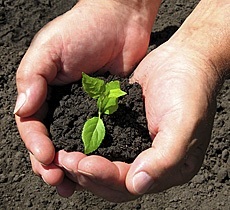
The organic gardener’s mantra is: feed the soil, the soil will feed your plants.
If you continually replenish soil humus by adding compost (or another source of humus such as well-rotted manure), and if you choose plants that are well suited to your soil type, climate, and your growing conditions, you will have fewer problems in the garden.
So what is humus exactly? Quite simply, it’s the stuff that makes soil come alive. Basically, it consists of the decayed remains of once living materials, most commonly plant residues and animal manures.
Caring for gardens organically
With mounting opposition to pesticide use and the current phase-out of many inorganic pesticides, we all have more incentive than ever to take care of our flower gardens and backyards more naturally.
When you have problems in the garden – whether it’s weeds, diseases, insects or other critters eating your plants – it’s best to look for a solution that’s environmentally friendly.
Instead of looking for the quick fix that promises to blast the bad guys into oblivion – with the unfortunate side effect of dispatching a lot of good guys too – try to work with rather than against natural systems.
Appropriately enough, this approach begins with soil that’s rich in organic matter. Soil researchers are now lending scientific weight to what organic advocates have long suspected: there are beneficial microbes in compost that activate pest and disease-resistance in plants.
Organic gardening – more things you can do:
- Encourage diversity. plant a variety of species – trees, shrubs, annuals and perennials – including species native to your region. A variety of species encourages many insects, frogs, toads and birds that eat insect pests.
- Invite frogs and toads into your yard with a pond or water feature. Toads, for example, feed on insects and other invertebrates-during the growing season, a single hungry toad can devour about 10,000 pests.
- Plant a tree or several if you have the space. In addition to providing cooling shade, trees act as natural air cleaners: one healthy deciduous tree can reduce airborne dust by as much as 7,000 particles per litre of air; it takes 500 full-sized trees absorb the carbon dioxide produced by a typical car driven 20,000 km/year. Even better, plant a tree that is native to your region.
Related Information
How compost benefits your soil, how to make it
Mulch – make it work in your garden


