Flower bulb planting is a job for crisp, sunny fall days. All spring-flowering bulbs, such as tulips, daffodils, snowdrops and crocuses, need a period of cold to flower well.
The key thing is to plant them about six weeks before hard ground frosts in your area. This timing allows plenty of time for root development.
Buying and storing bulbs
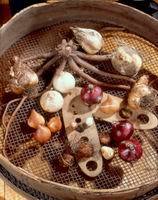 Bulbs and corms
For best quality, pick large bulbs – the more mature the bulb, the larger the flowers – and plant them as soon as possible.
If you have to put off bulb planting for a few days, store your bulbs in a dry, dark and cool place between 50° and 60°F (10° and 15°C).
You can use the vegetable compartment of your refrigerator, but keep bulbs away from ripening fruit (a gas emitted by fruit can ruin bulbs).
Before planting your bulbs, see: How to design with spring bulbs.
Step-by-step bulb planting tips:
Spring-flowering bulbs thrive in full or partial sun. Good drainage is important for most bulbs, so avoid placing them in soggy areas and in low-lying parts of the garden where water pools during wet winters and spring thaw.
- Dig a hole or trench large enough for several bulbs. Bulbs are most effective when planted in bunches. In small gardens, groupings of 6 to 12 are effective; in large gardens, use groups of 12 to 24. I prefer to plant drifts of bulbs, so I use a spade to dig the holes rather than a bulb planter (a tool with a handle that looks like a tin can with both ends cut out).
- Bulb size dictates how deep to plant. As a rule, plant large bulbs such as tulips, daffodils and ornamental onions (alliums) about 8 to 12 inches deep, and set smaller bulbs such as crocus and snowdrops 4 to 6 inches deep.
- Space large bulbs 3 to 6 inches apart and small ones 1 to 2 inches apart. If you’re confused about which end is up – this can be the case with tubers such as windflowers – just place them sideways, and they will right themselves.
- Cover bulbs with soil and water generously. Later, when the ground cools you can apply 2 to 3 inches of mulch to the surface, such as compost, well-rotted manure, shredded bark or chopped up leaves. This helps to prevent soil from drying out and to help keep temperatures stable through the winter.
- At planting time, you don’t actually need to apply fertilizer, as the bulbs have already been fattened up for bloom. However, for bulbs that will stay in place for a number of seasons, enrich the soil in the planting area with good organic compost or well-rotted cow manure worked into the soil when planting. You can also use a slow-release bulb food when planting.
Keeping pesky squirrels away from bulbs
Squirrels consider tulips and crocuses tasty treats, but fortunately, find daffodils unappetizing. Bulbs are most vulnerable after planting, when the soil is still soft from being dug up, and squirrels often discover them while burying nuts.
Bulb planting deeply, firming the soil down well, throwing a few leaves on top and then cleaning up any trace of bulb planting can help to discourage squirrels.
For serious theft problems, place chicken wire on top of the planted area and anchor it with pegs cut from wire coat hangers. The squirrels won’t enjoy digging through the mesh and you can remove it once the ground begins to freeze.
Personally, my solution is my dog, and I always seem to get dogs who love to chase squirrels. For me, this tactic works like a charm.
More on Spring Bulbs
Bulb planting: When to plant your bulbs
Cheerful early spring color with crocuses


