Balcony and roof gardening are growing in popularity, as more people move from houses into condos. The biggest challenge to successful container gardening on a balcony or roof top are strong winds and hot sun.
If you’re planning a roof garden, you should consult a structural engineer to ensure that roof is waterproof and can handle extra weight of planters, moist soil mixes, decking, furnishings and people.
Gardening on balconies is easier to set up, but there’s often an overhang that prevents rainfall from reaching container plants. In addition, watering can be a bit of a chore as it’s unusual to have hose access on a balcony.
Balcony and roof gardening considerations
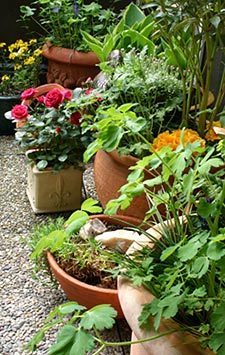
Supporting weight: For a roof garden, check roofing material – some types may need protective decking that sits on top of actual roof. Consult local building code about safety railings and installation requirements and find out if you need special planning permission. Place heavy containers over a load-bearing joist or close to load-bearing walls.
Access: Consider the best access for people and materials (soil mixes, containers, plants). If the roof garden is being constructed at same time as building, the larger, heavier, messier elements of the garden can be installed before you do interior finishing.
Utilities: Make sure you have a rooftop or balcony water source, outdoor electrical outlet, and storage space for tools and supplies.
Drainage: Balcony or roof gardening requires plenty of water, so check how and where the roof drains.
Balcony and roof gardening: planting and care
Containers and growing medium: Popular materials for containers are plastic, terra cotta or wood.
- With wood, you can custom build containers in a variety of sizes. Terra cotta dries out quickly, while the thicker modern plastics that resemble terra cotta or other traditional materials are lighter and retain more moisture.
- All containers need adequate drainage holes.
- Use light-weight soil-less mixes designed for container gardening, not garden soil.
Choosing plants: It will generally be sunny, hot, dry and windy during the growing season, so choose tough plants that will tolerate such conditions.
- If you’re going to grow permanent plants such as shrubs or small trees or perennials in containers, choose plants that are one or two zones hardier than your climatic zone. For example, if you’re in Zone 5, choose woody plants that are hardy to Zone 3 or 4.
- Provide some lath-type structures for shade. You can use vine-covered trellising as a wind-break or privacy screen. If you are adding a trellis or screen, make sure it’s properly supported.
Plant care: Protect permanent plantings (shrubs, small trees, vines, perennials) from freeze-thaw cycles by using large, deep containers and lining bottom of these containers with a one- or two-inch layer of polystyrene peanuts or foam.
- For added protection, also line the sides of your containers with one- or two-inch thick foam insulation.
- Daily watering is a must during the hot months of summer, so consider installing an easy-maintenance automatic drip patio irrigation
. Other solutions include self-watering containers
or using adjustable water reservoirs
to turn ordinary pots into self-watering planters.
- You can also retain moisture with mulch or by mixing moisture retaining crystals
into container potting soil.
- Use water-soluble fertilizers regularly and/or incorporate a slow-release pellets into top soil layer to release a little fertilizer each watering.
More Container Garden Tips
How to plant containers, choose best pots
Watering tips – make every drop count
Create a container garden with herbs


